Every article, newest first. Page 2 of 9.
Your AI needs two knowledge bases, and most companies have built neither
AI writes generic work for your company because it has nothing of yours to read. Real work needs a knowledge base with two halves: documented SOPs on the inside, an AI Brand Twin on the outside. Most companies buying AI seats have built neither, so the model fills the gap with the average of the internet.
Do we need a GTM consultant, a GTM advisor, or a fractional CMO?
Three roles, three prices, three completely different things in your hands when they leave. A consultant hands you a decision, a fractional CMO hands you execution, an advisor hands you a second opinion. Here's what each costs and how to tell which one you're actually short of.

What is an AI Brand Twin, and how does it shape what AI engines say about us?
Three narrators describe your company to buyers every week: your team, your AI tools, and the buyer's AI. You supervise one. An AI Brand Twin is the written source that makes all three agree, which is how it changes what the engines say about you.
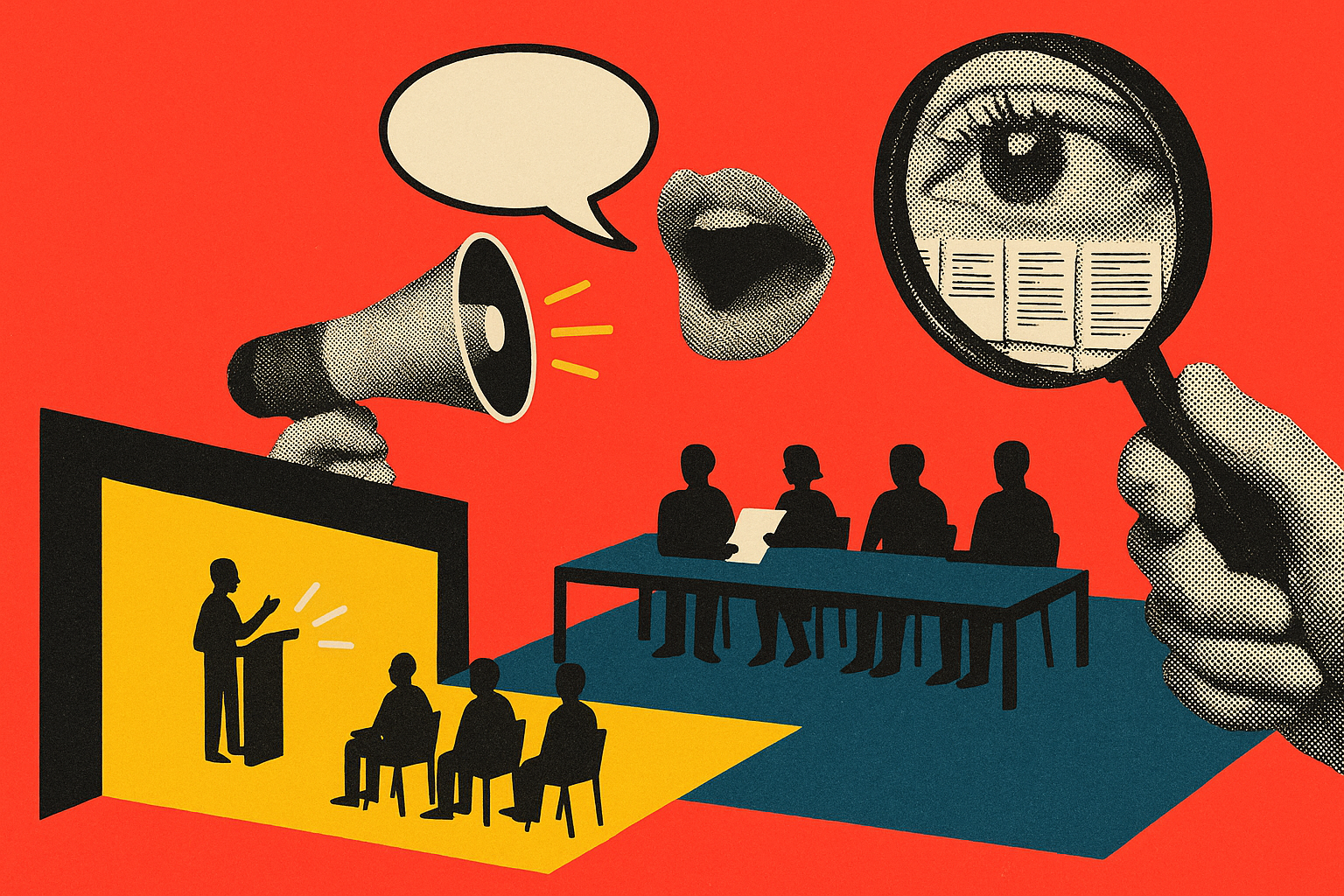
Is a strategic narrative in our sales deck enough?
A strategic narrative in a sales deck only works in a room where someone presents it. Two of the three places a B2B deal now gets decided have nobody from your company in them. Here's what the deck can't reach, a ten-minute test, and what to build instead.
Your reputation doesn't cross the border
Last Tuesday a cybersecurity CEO showed me six months of flat German pipeline and told me the problem was the rep he'd hired in Munich. I asked him one question: who is the buyer in Munich paying right now to do this job? Nobody on the team had an answer. That's the Home Field Message, and almost every company carrying one finds out at the border. Here's the villain, three tests to run before your next market entry, and what to fix first.
Explaining is the tax you pay for a story you never published
A rep I listened in on last Thursday spent eleven minutes explaining what his company does. The buyer already had the answer open in another window. She'd asked an AI three days earlier, read what came back, and booked the call to check it against a human. He never got to that conversation, because he was still doing the introduction. That's the Live Rebuild, and most B2B companies run it on every first call. Here's the villain, three tests you can run on calls you've already recorded, and what to fix first.
The week a competitor raises is the week your category gets decided
A funding round doesn't hand your competitor the market. It hands the category a few weeks of attention it won't get again all year, and whoever answers the buyer's question most clearly during that stretch becomes the reference point everyone else gets compared to. Most CEOs respond by going quiet until the noise passes. Here's why that's the expensive choice, three tests to run this week, and the one thing that lets you move in days instead of quarters.
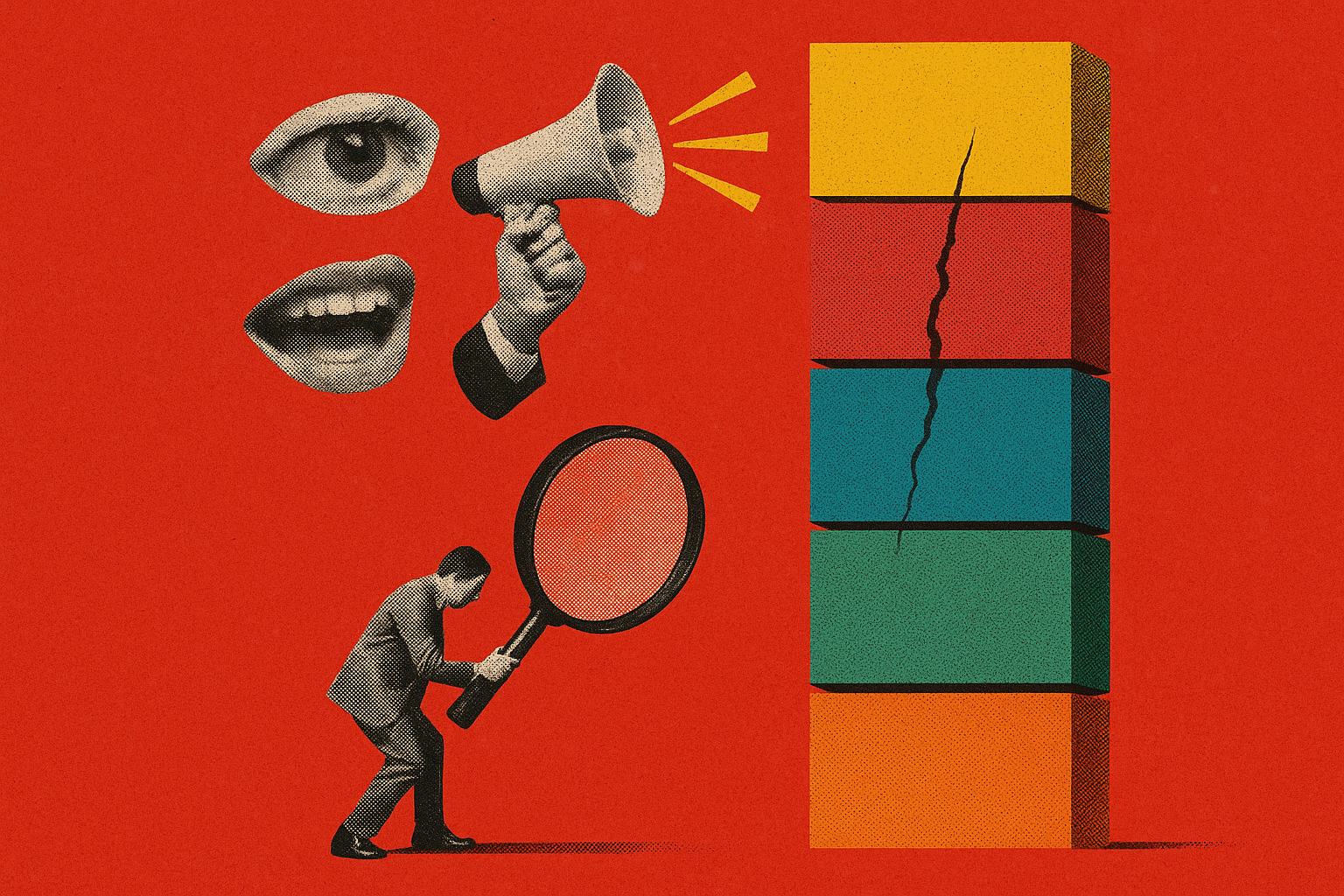
Why isn't our go-to-market working, and how do we tell which layer broke?
A go-to-market has five layers, and they fail downward. The break almost always sits above the layer you're staring at, because the layers with dashboards are the ones at the bottom. Here's the day-long diagnostic that finds the real one.

Which positioning framework should we use, and where does each one break?
Seven positioning frameworks compared by their breaking condition rather than their reputation, with the input each one quietly assumes you're bringing, and a 302-homepage finding that explains why most rollouts stall.
How we use AI before and after a sales call
A practical routine for preparing with evidence, asking better questions and catching what you missed before you follow up. From Greg Rosner’s conversation with Paul Kirch.
Your chief of staff is the only copy of your company story
Every artifact that carries your company story has a deadline and an owner. The story underneath them has neither, which is why it gets rebuilt from scratch every quarter by whoever has the board deck due, and why the company's narrative memory quietly becomes one person's working files. Here's the Rebuild Tax, three tests to measure what it's costing you, and the structural fix.
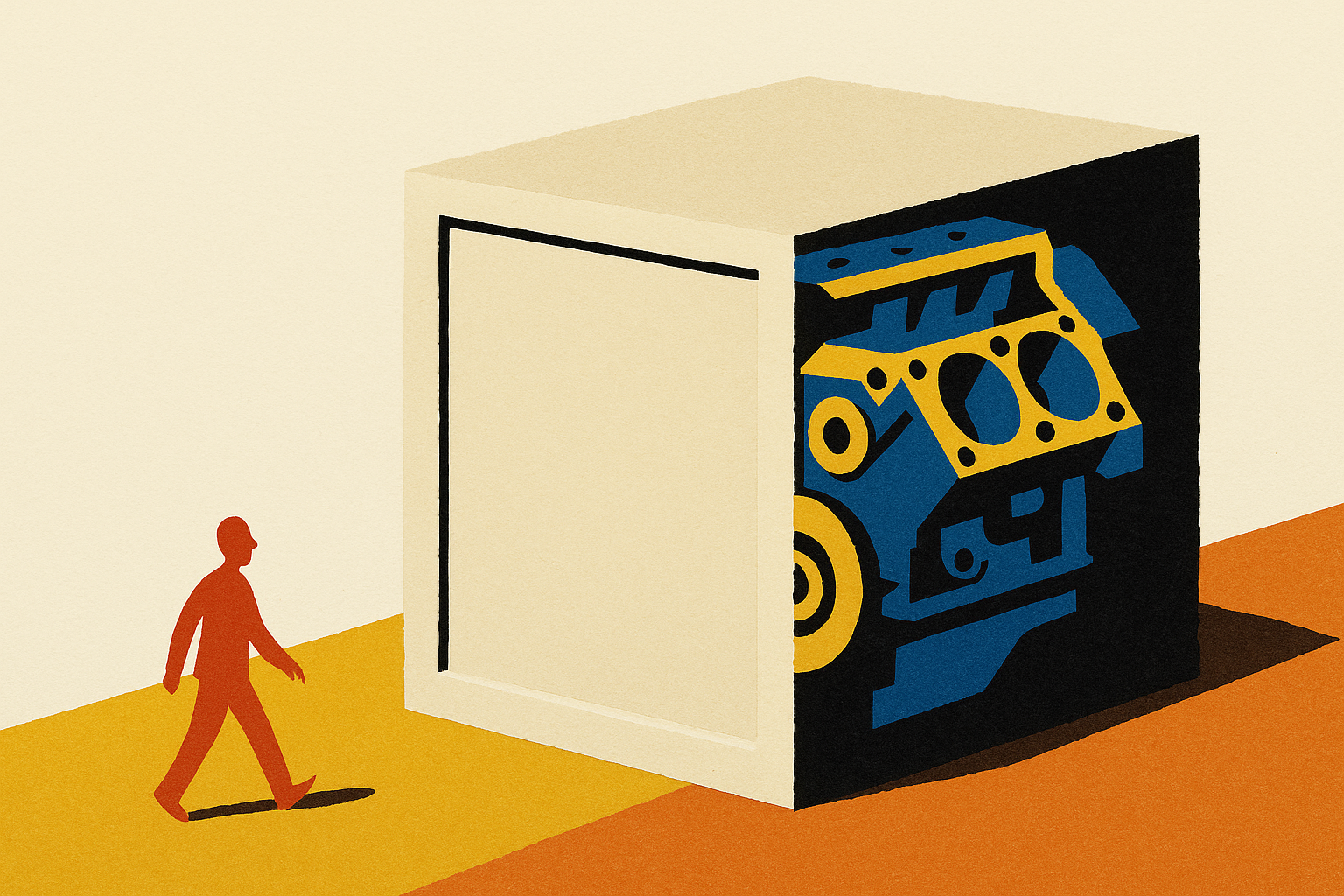
Does our AI company need brand strategy, or just a better model?
AI founders keep choosing between the next model release and a real positioning rebuild. The model is the one part of your company a buyer never sees, and the language around it is the only part an AI engine can read. Here's how to tell which one is actually blocking your pipeline.
Your forecast knows the message is broken before marketing does
Deals keep moving their close date and every one of them arrives with a reason about a calendar. Budget cycle, a new VP, a reorg. Those reasons are true and they are almost never the cause. The CFO is sitting on two years of evidence about why buyers don't move, filed under scheduling, and nobody has ever asked to read it that way.
We finished a brand transformation sprint. Why hasn't anything actually changed?
A brand transformation sprint changes what you've decided and how clearly you say it. It doesn't change what your team does in week nine when a big wrong-fit deal shows up. Here's the honest accounting of what a strategy sprint delivers, what it leaves to you, and how to tell six months later whether it took.

Which of our products should have their own brand, and which should just be features?
Most products shouldn't have their own brand. One earns a name when it has its own buyer, its own budget line, and its own competitor. Here's the test, what a stray name costs you in sales and in AI visibility, and which architecture actually fits a $5M-$75M company.
Our champion just left. Do we work their replacement or re-open the problem?
A founder called me Tuesday about the best deal in his quarter, eighty percent in the forecast for two quarters running. Then his champion took a job two states away and the replacement went politely, permanently quiet. He didn't lose a relationship. He lost the only person who thought the problem was worth solving this year. Meet the Borrowed Deal, why chasing the successor is the one play that guarantees a slow no, and three tests to run on your forecast this afternoon.
Nobody put the founder's story in the handover
A new CEO takes over from a founder and everything transfers cleanly: contracts, roadmap, comp plans, brand guide. One asset never got written down, because it lived in the founder's head, so nobody put it on the list. What he wrote keeps working for about two quarters, which is exactly long enough for everyone to agree the handover went fine.
Do we fix our positioning, our messaging, or our website design first?
Brand strategy has three steps and they only work in one order. Position, then message, then design. Here's what each step actually produces, and what 47 homepage audits say about companies that start at the end.

How do we build a brand style guide our team and our AI will both follow?
Most brand style guides document the layer anybody could copy by looking, and skip the layer only you can write. Here's the order that makes one followable by people and machines.
Our buyer says they'll build it in-house. Do we fight the build or the delay?
A VP of Sales sent me the recording with a note that said "tell me where this went wrong." Thirty-eight good minutes, then the prospect's engineering lead unmuted and said "honestly, we could probably build this." The rep had a cost breakdown ready. Five months later the deal was dead and nothing had been built. Meet the Phantom Build, why arguing capability hands the room to the wrong person, and three tests to run on your pipeline this week.
A new marketing leader inherits a brief nobody ever wrote
A new CMO gets ninety days to prove they were the right hire, and the fastest way to look productive is to ship something visible. A campaign, a site refresh, a rebrand. Every one of those sits on a story the company never actually decided. Three tests to run in week one, before you spend your credibility on the wrong layer.

What does brand strategy consulting actually deliver, and what should you refuse to pay for?
Three things are worth paying for and four common line items aren't. Here's the week-twelve test that tells them apart before you sign anything.
Which branding services do we actually need at $5M, and which can wait until $50M?
A $5M company needs a decided position written down. A $50M company needs that plus the machinery to enforce it across forty people. The branding menu looks identical at both ends, which is how founders at both ends buy the wrong row.

Our brand feels dated. Is a refresh enough, or do we need a full rebrand?
A refresh fixes expression. A rebrand reopens meaning. Both problems feel identical from the corner office, which is why most CEOs buy the cheaper one and get a nicer version of the same confusion. Meet Brand Lag, the measurable distance between the company you've become and the company your brand still describes, plus the four questions that tell you which layer actually moved.
We sell services, not software. Do we narrow the story or keep every door open?
A managing partner sent me his homepage: eleven service lines in a grid under the sentence "trusted expertise across the product lifecycle." His two toughest competitors had ten and twelve, in the same grid, under roughly the same sentence. Then he defended the list. Meet the Breadth Penalty, why an accurate description of a services firm now costs more than it earns, and three tests to run this week.
Do we need a branding agency or a marketing agency?
Both firms put messaging in the proposal and mean different artifacts by it. Here's what each one actually sells, three checks that name the gap you really have, and the four things to settle before you sign either contract.
A brand consultant owes you a decision, a marketing consultant owes you a system
The two titles overlap enough that reading profiles won't sort them. What sorts them is the accountability object, and one sentence you write before you talk to anyone.
The branding agency decision gets made before you meet a single agency
Five capable firms will hand you five different theories of who your company is, and you'll pick the one that sounded best on a Thursday. The decision that matters happens before the first pitch, and it's yours.
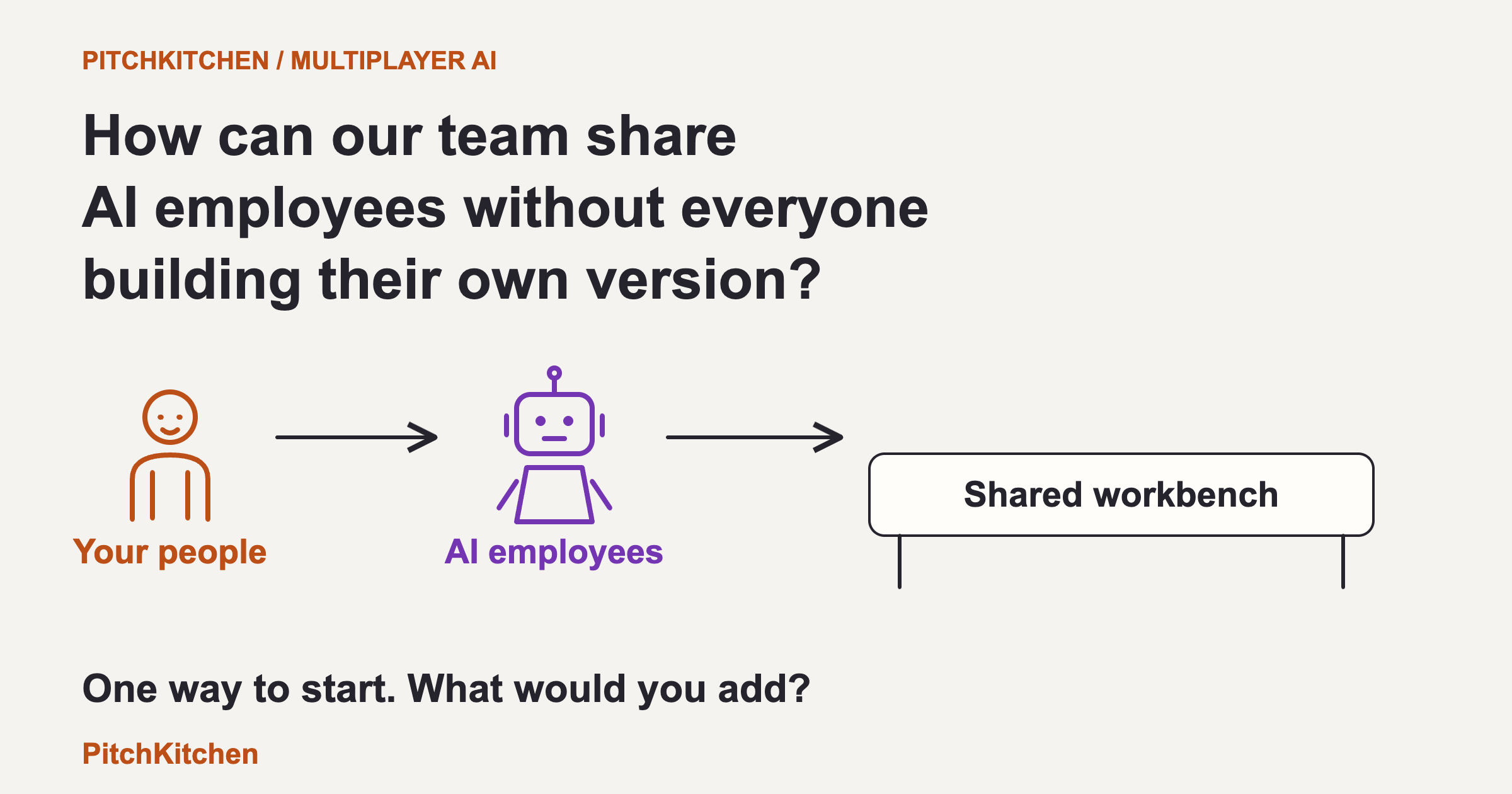
How can our team share AI employees without everyone building their own version?
Research. Prospecting. Proposals. Invoicing. A practical guide to sharing specialized AI employees, with human managers and clear handoffs.
We're raising prices. Do our customers re-buy or re-shop?
A CEO read me the price increase letter his lawyer had already cleared. Three paragraphs: thanks for the partnership, rising infrastructure costs, here's the new number. I asked what a customer gets for the extra nine percent and the line went quiet. Meet the Cost Confession, why the friction that used to protect a price increase is gone, and three tests to run before the letter goes out.

What actually happens in a two-week brand sprint, and what does it leave unfixed?
A two-week brand sprint is ten working days and it buys articulation: your leadership team's existing beliefs, said well. Here's the day-by-day agenda, the dependency hiding in each stage, and the four things ten days structurally can't reach.

How long does a B2B rebrand take, and what does each phase cost?
A full B2B rebrand runs four to eight months and $65,000 to $260,000 across six phases. Here's the timeline and the cost of each one, plus the phase that decides whether the other five stay on schedule.

How do we run a repositioning without breaking what's already working?
A B2B repositioning runs in six steps, and five of them are easy. Here's the sequence, the decision that sits inside each step, and the equity you protect on the way through.
We're pivoting. Do we announce the new story or grow into it?
A CEO told me his company had changed completely in eighteen months, then shared a homepage that still described the company he started. He wasn't lazy. He was waiting to feel ready. Meet the Trailing Story, and the three tests that tell you how far behind your evidence actually is.
Which sales coaching framework fits a founder-led sales team?
GROW, Sandler, MEDDIC, Challenger and Command of the Message each coach a different layer, and four of the five assume a shared story your team may not have yet. Here's the twenty-minute test that tells you which half of the problem you're in.
What actually separates the top brand messaging agencies on Clutch?
Clutch ranks brand messaging agencies on reviews, headcount, hourly rate, and project minimums. None of those predicts whether a firm will fix your positioning. Here's what the directory can't see, the four axes the good firms actually differ on, and the forty-minute pass that sorts a shortlist of three.
Do we need a fintech specialist, or will any good messaging partner do?
Most fintech shortlists get built on the filter that matters least. Category fluency buys you a week of onboarding. What actually governs a fintech engagement is whether the partner can write under legal review, hold two buyers who want opposite things, and argue against an institution your buyer already trusts. Here's the twenty-minute diagnostic to run before you talk to anyone, and the five questions that separate a firm that has done this from one that hasn't.
We're 18 months from a raise. Is our story an asset or a discount?
A founder showed me the data room he'd spent four months building, then showed me the homepage a buyer reads first. The numbers were airtight. The story took nine minutes to explain out loud. Here's the part nobody says at the kickoff: diligence teams price what they can verify fast, and everything else lands in the risk column. Meet the Clarity Discount, and the three tests that find yours while there's still time to change the answer.
We're burning runway. Do we fix the message or keep selling the one we have?
You have a countable number of months and a story you already know is mushy. The instinct is to cut the thinking and buy more doing. Run the At-Bat Count first, because it usually shows the rebuild is faster than the runway you'd spend explaining.

How do we use statistics without sounding like every competitor?
213 of 302 homepages we scored quote a hard number, and 108 of them still never say what standing still costs the buyer. Here's the difference between a statistic that sells your category and one that sells you.
How do we prove our AI is real and not just marketing?
Describing your AI better won't make a buyer believe it. Almost every B2B homepage is specific about AI now, and most are still invisible. What moves a skeptical buyer is a claim that costs something to make.
What do fintech companies with great messaging do differently?
Fintech messaging converges because category language is shared property and legal review sands off whatever's left. Here's what the companies with the clearest fintech messaging do instead, and the five checks that tell you where you stand.
Should we fire our CMO, or did we hand them a message nobody could sell?
Firing the marketing leader is the most expensive way to find out the problem was upstream of them. Before you make the call, find out whether anyone ever handed them a decided story, or just a revenue number and a brand kit.

Why do our messaging interviews give us answers we already had?
Discovery interviews hand back the answers you walked in with because the questions asked you to summarize. Truth extraction asks for episodes instead, and what comes out is the sentence you've never written down.
How do we make our messaging problem-centric without just describing pain everyone already knows?
Problem-centric messaging fails when the problem you center has no name and no price. Four tests for picking the right one, plus what our own AI-visibility tracking shows about described problems versus named ones.

How does a CRO make the case for fixing the messaging without starting a war with marketing?
The revenue leader sees it first and owns none of it. Walk in complaining about the copy and you've started a taste argument nobody can settle. Walk in with ten losses in the buyer's own words and you've handed the CEO something he can act on.
Why does our message work in person but not on our website?
When you explain the product, buyers understand its value. Your website has to do that without your help. Here is how to find the missing buying reasons and carry them onto the page.
We need a new website. Should we rebuild on WordPress or go AI-native?
The platform argument is the third decision, not the first. The one that shapes the next three years is how fast your company can put a true answer on the internet once the new site is live. Most B2B rebuilds move the design and leave that number exactly where it was.
Or find your problem