Every article, newest first. Page 8 of 9.
How do you get sales and marketing using the same message?
Sales and marketing drift apart because no shared source of truth exists for the 'why us' answer. Here's the four-part diagnostic to measure your gap and the three-step playbook to close it.

How do we differentiate when everyone claims the same benefits?
When every competitor in your category claims faster, smarter, and easier, the traditional differentiation playbook stops working. Here's the strategic framework for breaking out of the same-claims trap without just swapping one set of buzzwords for another.

How do messaging frameworks improve sales team performance?
Most sales performance problems aren't sales problems. They're messaging problems. Here's the five-signal diagnostic that tells you which one you're in - and what changes when a shared messaging framework gives every rep the same story to work from.
Category design vs positioning: which does your B2B company need?
Category design and positioning get confused constantly. Here's the teaching guide on how they actually differ, which one most $5M-$75M B2B companies need right now, and why the sequence matters.
Why do buyers keep showing up sold on a competitor we've barely heard of?
Your buyer built their shortlist by asking ChatGPT before a single human at your company knew the deal existed. There are two buyers now: the person, and the machine that briefs the person. Here are the three moves that get the machine to recommend you.
How do we position against a much bigger competitor?
Going up against a competitor ten times your size? You don't win by matching them. You win by changing what the buyer compares. Here are six plays to position against a bigger competitor so their size becomes the liability.
Why do competitors with weaker products win more deals than us?
Losing deals to a competitor you know is weaker? You didn't lose on the product. You lost on clarity. Here's why the clearer message beats the better product in B2B, and how to fix it.
Why can't anyone but the founder close our deals?
You hired the reps. You bought the deck. You ran the training. And the deals still die unless you're the one in the room. Most founders read that as a hiring problem, so they hire again, and the bottleneck stays exactly where it was. Here's the question almost nobody asks first: is your sales message written down anywhere, or does it only exist in your mouth? Those are two different diagnoses with two different fixes. Here's how to tell which one you're living in, and what to do once you know.

Why do buyers love our product but still not buy?
The most expensive B2B losses don't go to a competitor. They go to nothing. Here's why buyers who love your product still stall in 'no decision,' and why it's a story problem, not a product problem.

How do we sell on outcomes instead of features in B2B?
When your solution becomes a row in a spreadsheet next to three competitors, price decides the rest. Here's how to stop feature-selling and lead with the outcome instead.

How much does a fractional CMO cost, and is it worth it?
Fractional CMO pricing runs from a few thousand a month to mid five figures. Here's what you're actually paying for, how it compares to a full-time hire and an agency, and how to tell if it's worth it for your stage.

What does a strong B2B positioning statement actually look like?
Most B2B positioning statements survive an internal meeting and die in the market. Here's what a strong one looks like, with examples and a five-test diagnostic.
How do I get out of being the only one who can close deals in my company?
Your deals close the moment you rejoin the call. That's not a skills gap on your team, it's a conviction-transfer gap: your closing story lives only in your head, so reps inherit a feature deck instead of the narrative that tips deals. Here's the silent-founder deal test, the four-stage sequence to hand off the close without tanking win rate, and the three numbers that prove you're actually out.

What does it actually take to scale a B2B company past $5M in revenue?
The message that got a B2B company to $5M is usually the founder. Past $5M, the founder runs out of calendar, and most teams try to fix that with more headcount instead of more clarity. Three traps catch nearly everyone in the $5M-$15M band: the Founder Hero Trap, the Hire-Through Trap, and the Tactic Trap. A three-trap diagnostic you can run this week, the pattern across 200-plus $5M-$75M companies, a composite $9M to $22M healthtech rebuild, and the comparison table of what actually breaks through.
The future of marketing isn't traffic. It's narrative control.
Neil Patel just said the future of marketing isn't traffic, it's narrative control. He's right, and I'll be honest: I didn't see this coming. I wasn't predicting AI would become the interface between people and everything they buy. I've just spent my career helping companies tell their story clearly. What changed is the stakes. AI now compacts your whole website into a single paragraph for the conversation that decides everything ... a buyer asking ChatGPT who in their industry can solve their problem. If your story isn't clear about who it's for, why you exist, and what you want them to do, you're invisible to the most important person in the room. Here's the work that makes you the name the machine repeats.

Why do B2B sales teams keep asking marketing for new leads instead of better ones?
Sales asks for more leads when the real problem is lead quality. Marketing Sherpa says 79 percent of marketing leads never convert. Forrester says 73 percent aren't sales-ready at handoff. Pumping more volume into that funnel hides the problem, it doesn't fix it. The fix is a tighter message that pre-qualifies buyers before sales picks up the phone. Diagnostic, pattern across 200-plus $5M-$75M B2B companies, $21M Series B HR-tech rebuild (SQL conversion 12 to 31 percent in 12 weeks), and the more-vs-better comparison.
What questions should we ask our marketing team to know if it's working?
Most founders ask marketing what they're working on. Wrong question. The right ones tie every dollar of spend to pipeline, pipeline to revenue, and the message to whether buyers can repeat it back. Here are the 10 questions that separate marketing that's working from marketing that's just busy, how to read the answers, and what a deflection sounds like before it costs you a year.
Every sales rep is telling a different story. Here's how to audit and fix it in 7 steps.
Your reps aren't going off-script. They never had a script worth following. A sales enablement asset audit inventories every customer-facing asset, scores each one against a single go-to-market narrative, and standardizes the ones that survive, so marketing and sales finally share one story and you've got an AI-ready content foundation instead of forty assets telling fifteen different versions of the truth.
How do I tell if a marketing message is working or just sounds good in the room?
Wynter's 2024 Voice of the Buyer benchmark found only 19% of B2B SaaS teams ever run a structured message-clarity test with their actual ICP before launching. The other 81% test the message internally and ship. A message that sounds good in the boardroom is approved. A message that's working is one strangers who match your ICP can paraphrase back to you. Those are not the same test. Here's how to tell the difference, and how to run the real one.

Why does my B2B website sound like every other B2B website?
Wynter's 2025 study found 94% of B2B SaaS homepages converge on the same six phrases. Contentifai found 73% use one of six hero-section templates. Your homepage sounds like every other B2B homepage because the inputs are. Run five diagnostic tests, interview five customers, name your villain. The fix isn't a copy rewrite. It's a positioning rebuild.
What's the difference between AEO, GEO, and SEO for B2B founders?
SEO ranks pages. AEO selects the answer Google AI Overviews and Perplexity show. GEO selects which companies ChatGPT, Claude, and Gemini name in their recommendations. Three mechanics. Three plays. Three ROI horizons. Most B2B founders are still funding the first one and wondering why pipeline isn't moving.

How do I get my B2B brand to show up in ChatGPT and Claude recommendations?
B2B brands earn recommendations from ChatGPT, Claude, and Perplexity through three signals: entity recognition, citation density, and contextual query match. Most B2B companies fail at least two of the three. Here's the Definer Brands three-gap framework, the diagnostic to find your gap, and what to fix this quarter.

Why saying "end-to-end" or "all-in-one" on a B2B SaaS homepage is a lie
Saying 'end-to-end' or 'all-in-one' on a B2B SaaS homepage is usually a lie ... and even when it isn't, the homepage is still talking about itself. Wynter's 2025 study put 94% of B2B SaaS homepages on the same six phrases. GetUplift's 2024 audit found roughly 70% leading with 'end-to-end,' 'complete solution,' or 'all-in-one.' The trap isn't one phrase. It's a family of generic comprehensiveness claims that all signal the same strategic indecision. From your customer's perspective, you're one hole in a bigger world. Here's how to know if your homepage is lying and what gets a B2B founder out.
When is the right time for a B2B founder to fix their positioning?
Earlier than it feels comfortable, and almost always before you think you need to. Anthony Pierri at FletchPMM has analyzed more than 1,000 B2B SaaS homepages and roughly 80% of founders he reviews are scaling marketing spend on top of broken positioning. There are five specific trigger windows where the fix is cheap, and four of them get expensive fast.

Should B2B founders hire a marketing leader, work with an agency, or use a fractional CMO?
64% of B2B founders in the $5M-$75M range cycle through more than one marketing leader inside 24 months. 41% also fire an agency. 28% end a fractional CMO engagement. The structure decision rarely predicts pipeline outcomes. What predicts outcomes is whether the upstream message is locked. Five questions to run before any contract, the comparison framework after the diagnostic clears, and a $19M Series B fintech case where pipeline meetings jumped from 12 to 31 a month without one product change.

Why don't B2B websites convert traffic into pipeline anymore?
Most B2B websites in the $5M-$75M range fail the Cover-the-Logo Test, lead with 'we' instead of a named buyer problem, and read like a brochure instead of a diagnosis. Traffic is still landing. Conversion isn't. Five tests to run this week, the macro shift in 2026 that made this worse, and a $22M Series B fintech that recovered demo volume by rebuilding the message instead of the website.

Is my B2B software product still good enough for the AI age?
Probably yes. Across 200+ B2B messaging audits, 93% of founders panicking about AI-age competitiveness had products that were genuinely strong but homepages that read like every competitor. AI engines can't differentiate generic 'AI-powered' descriptions. Five diagnostics to tell a product problem from a positioning problem, the SaaStr/PitchBook/Wynter data on why this is hitting harder in 2026, and a $42M Series C case study where the deal cycle dropped 39 days without one product change.

Why can't B2B founders scale sales beyond themselves in the $5M-$75M range?
Founders can't hand off sales not because hiring failed, but because the company's narrative ... category, villain, old-way / new-way, promised-land outcome ... lives only in the founder's head. Reps get a deck of features. Customers don't buy features anymore. Seven diagnostic questions, the stats behind the bottleneck, and the writing exercise that breaks the founder loop.
Why are founders getting generic strategy advice from ChatGPT and other LLMs?
Founders aren't getting bad AI strategy advice because the model is weak. They're getting it because they're feeding the model a fraction of their actual business context, and the model fills in the gaps with the average of the internet. Five tests to spot trendslop in your own AI output, and the briefing layer that fixes it.

Why is our sales team selling something different than what marketing is saying?
Marketing says one thing. Sales says another. The customer hears two stories and trusts neither. More alignment meetings won't close that gap, because it isn't an alignment problem. Somebody has to decide whose story it is. Here's the spine, worked through with sales trainer Richard Harris.

The End-to-End Solution Fallacy
Every vendor sells a complete solution. None of them are. The customer knows. The mismatch is why your homepage sounds suspicious.

Take the 7-Word Verbal Identity Challenge
In exactly seven words, describe what changes for your customer after working with you. No buzzwords. No vague adjectives. Make us SEE the transformation. The diagnostic that tells you whether you actually know what you sell.
Why Your Current B2B Messaging Is Killing Your Growth
9 in 10 growth-stage B2B founders we audit think their messaging problem is a tactical problem. They've tried the rewrites, the new agency, the LinkedIn ghostwriter, the AI tool. They think the next tactic will fix it. It won't. The problem they're describing as 'marketing isn't working' is a positioning failure two layers upstream, and every tactical attempt is just a different shade of lipstick on the same pig. Three diagnostic tests, 30 minutes, no agency required, will tell you whether the message itself is bleeding pipeline you should be closing.
The Discovery Prompter: A Sales Deck Narrative Strategy That Stops Pitching and Starts Enrolling
A sales deck narrative strategy that closes complex B2B deals doesn't pitch the product. It prompts the buyer's own discovery. Across 100+ B2B sales decks we've audited in 2026, the ones closing $25K+ deals share three traits. The ones losing share one: they explain. Here's the diagnostic, the pattern, and the playbook for rebuilding your deck as a Discovery Prompter.
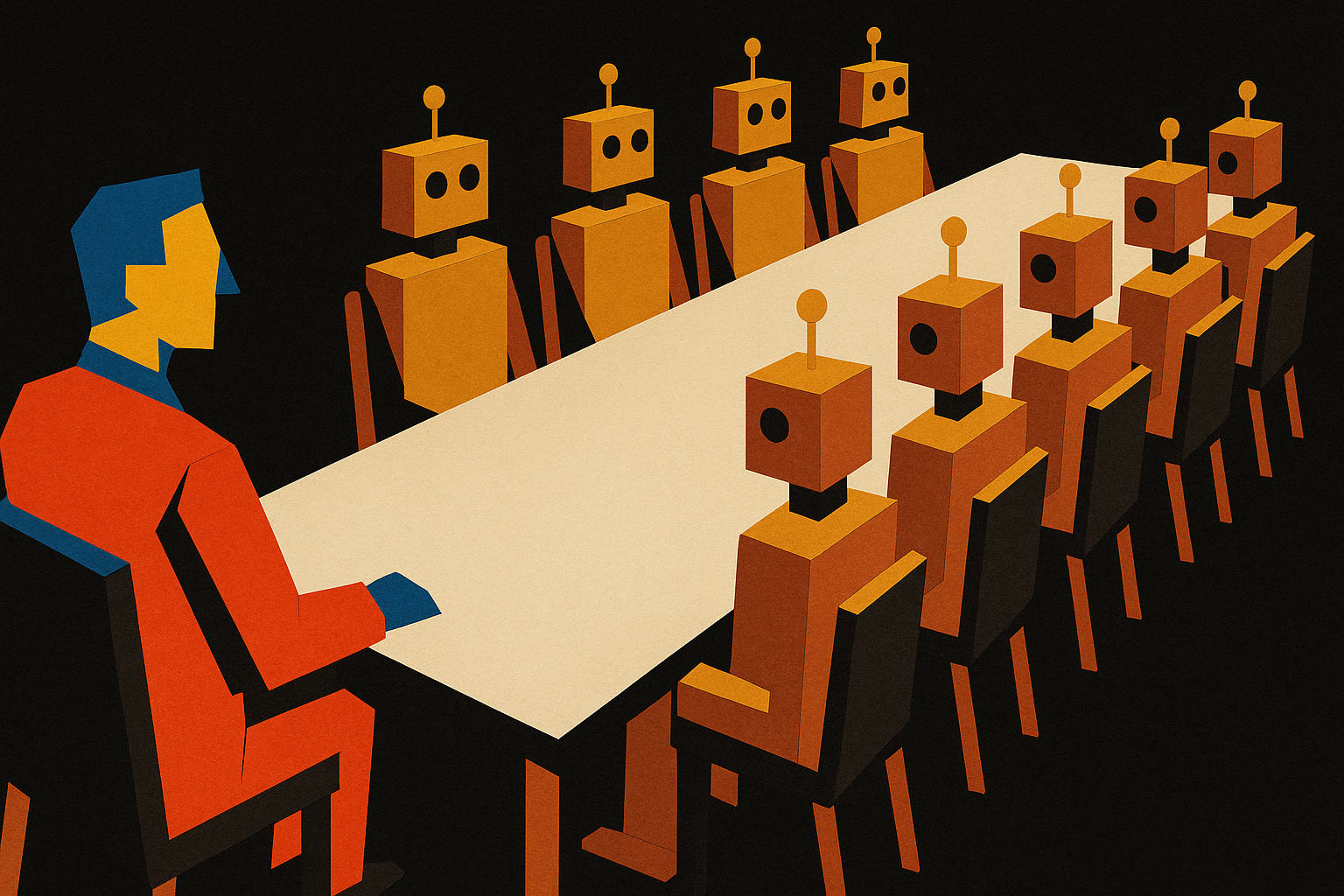
The Death of the Org Chart Agency
The agency is still standing, the lights are still on, the clients are still paying. Just the way a forest looks like a forest the morning after a fire, before anyone walks close enough to see the ash. AI didn't replace the specialists. It removed the reason they had to be separate humans in the first place. Here's what comes next.

Story-Driven Homepage: The 2026 Playbook for Converting B2B Traffic
A story-driven homepage centers the buyer's transformation, not the company's features. We've audited 200+ B2B homepages at $5M-$75M companies this year. The average homepage runs 78 percent self-talk. Nine in ten lead with 'we.' Seven in ten fail the Cover-the-Logo Test. Here's the diagnostic, the pattern, and the playbook for converting B2B traffic in 2026.

AI Brand Twin: Scaling Voice Without Losing Soul
An AI Brand Twin is a custom GPT, Claude Project, or Gemini Gem trained on your Magnetic Messaging Framework, running in three stacked layers: knowledge, behavior, and per-format style. Most $5M-$75M B2B companies skip the bible and get AI-Parmesan back. The ones that build all three layers scale the voice they already have.
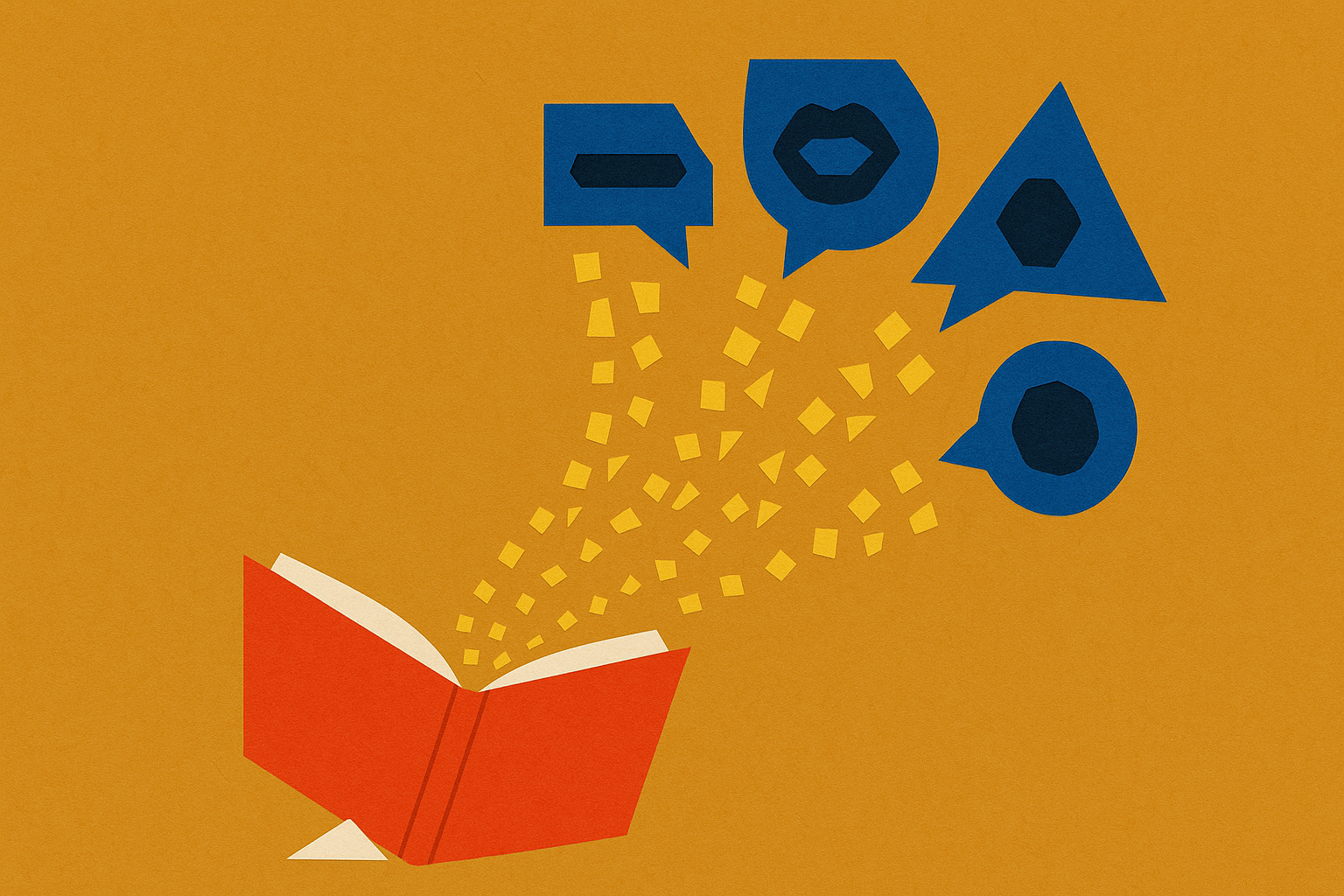
AEO Strategy: How to Rank in ChatGPT, Gemini, Perplexity, and Claude
AEO isn't SEO with new keywords. It's the practice of being quotable enough that AI engines lift your phrases verbatim into their answers. Most B2B sites we audit score 3 out of 10 on AEO. Here's the diagnostic, the patterns, and what to fix this week.
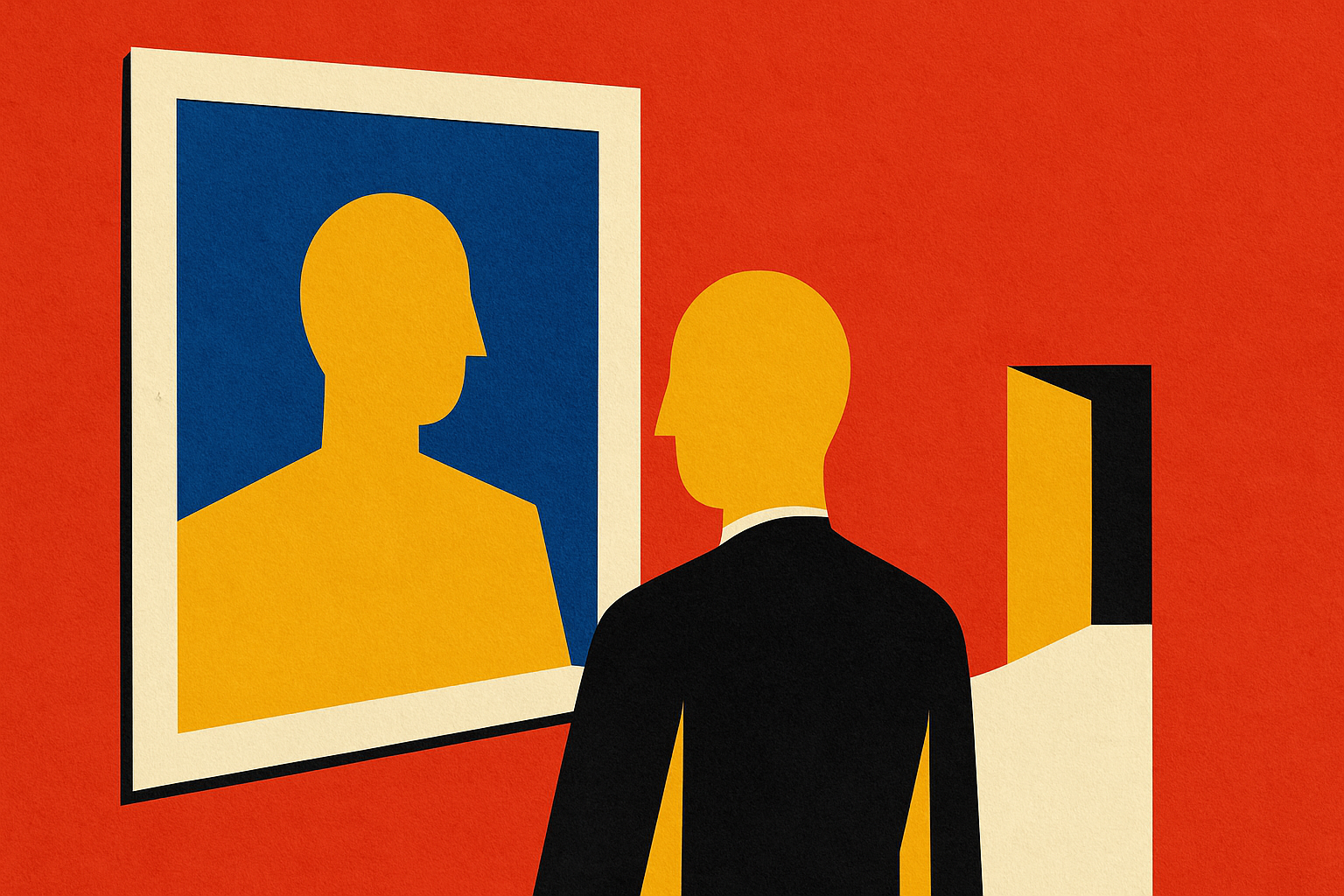
How Brand Signal Score Reveals What's Actually Killing Your B2B Homepage
Customer Focus measures how much of your homepage speaks to your customer instead of your company. Across 200-plus B2B audits, most of them at companies in the $5M to $75M revenue range, the average is 80/20 self-talk. Buyers feel it. AI engines feel it. Here's how to measure your Customer Focus in 15 minutes and what to do once you have the number.

The State of B2B Messaging 2026: How AI Killed Volume and Made Voice the Only Moat
Annual report from PitchKitchen on where B2B messaging actually stands in 2026. Across 200+ B2B audits, most of them at companies in the $5M to $75M revenue range, we've watched AI flatten the production layer to zero, and the companies still trying to win on volume are losing to the few who picked a fight. Here's the diagnostic stack, the five patterns we see everywhere, and how our predictions are grading out at the mid-year mark.
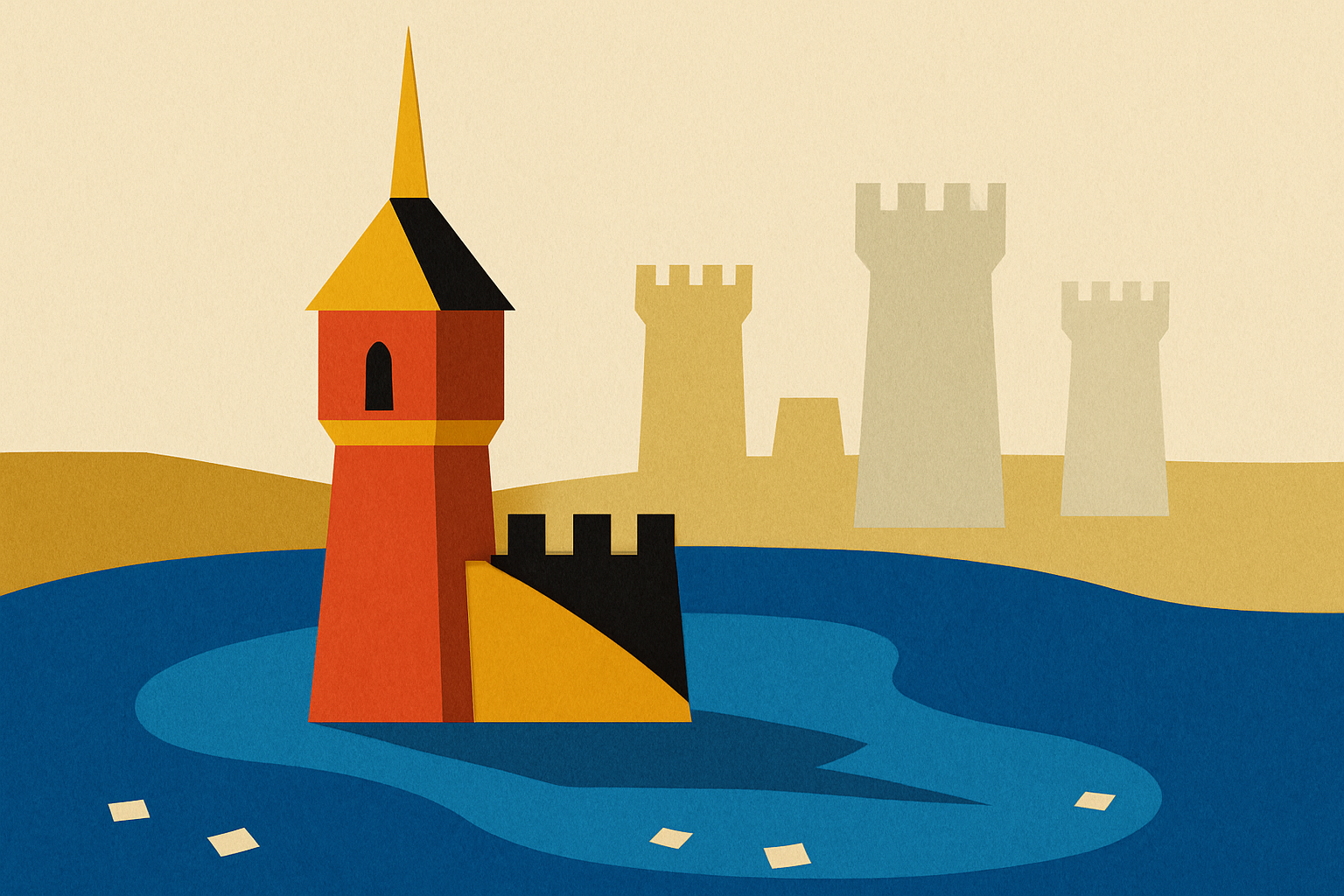
Strategic Positioning Is the Only Moat AI Can't Copy
Most B2B "positioning" is a slogan that could live on your competitor's homepage and nobody would notice. Real positioning is a stake-in-the-ground point of view that AI can't copy because AI never had access to it. Here's the diagnostic, the macro frame, and what a $5M to $75M B2B company can do about it this week.

AI-Parmesan: The B2B Marketing Plague Nobody Is Naming
If your homepage says 'AI-powered platform that empowers your team to...' you're inside the pattern. So is your competitor. So is everyone. There's a name for it. Here's the diagnostic and the fix.

Half of Your Brand Identity Is Invisible to AI. Guess Which Half.
A CEO just spent $80K rebranding. New logo, new colors, beautiful 60-page brand book. Same homepage copy. He just polished the half nobody sees ... and the half AI can't read.

No One Talks About What You Actually Lose When Your AI Content Sounds Like Everyone Else's
Everyone talks about how to use AI to create more content. Nobody talks about what you lose when that content sounds like everyone else's. You're losing trust, positioning, and compounding. And most companies won't notice until the damage is done.

You Don't Need a Marketing Team. You Need a Story. AI Should Be Doing the Rest.
Most B2B founders are still paying the 2022 Marketing Production Tax in 2026. Six bodies and an agency to ship a homepage update. Meanwhile a founder with a Brand Twin ships 20 pages in an afternoon. The team isn't shrinking because of layoffs. The work just collapsed.

Founders Don't Need Another Brand Strategist. They Need a Message Doula.
Most founders don't have a messaging problem. They have an articulation problem. The marketers and CMOs they keep hiring are trained to treat that as a medical procedure. It isn't. It's a transformation. And what they actually need is a doula.
AI-Parmesan Just Became a Securities Problem
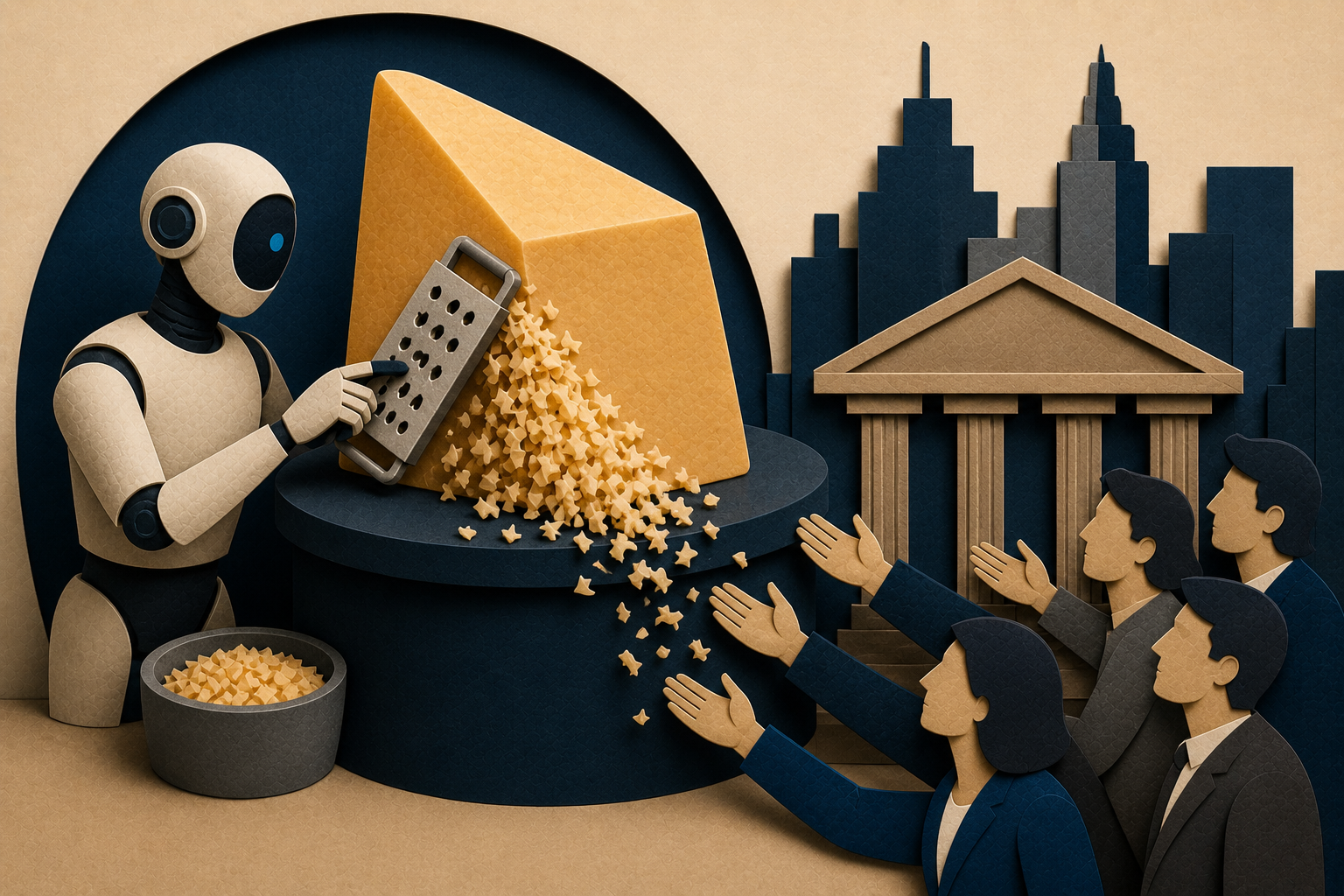
Fortune just ran a Baker McKenzie piece on AI-washing. 51 securities class actions in five years. Global Predictions got SEC-charged for one sentence. AI-Parmesan stopped being a positioning problem the day a top-100 law firm explained why your homepage is now litigation exposure.
Mockups and Wireframes Are Dead
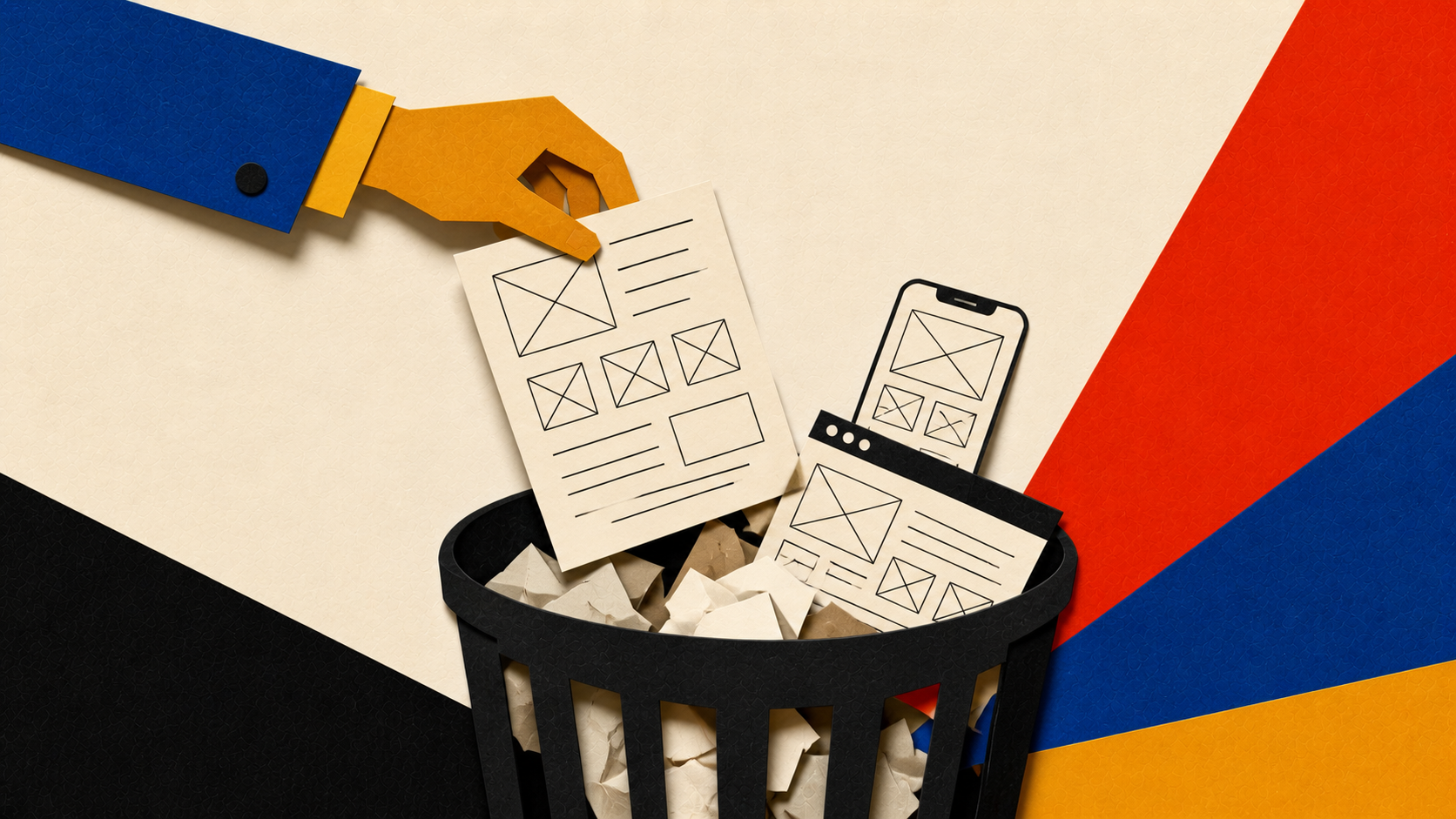
A CEO just got a $38K, 12-week website redesign proposal. Discovery phase. Wireframes. Three rounds of mockups. Development. QA. The whole pipeline. Every step of it is dead. He just hasn't been told yet.
Or find your problem