Every article, newest first. Page 5 of 9.

PitchKitchen vs Fletch PMM: do you need a homepage positioning sprint or a full narrative identity?
Fletch PMM sells a two-week Homepage Positioning Sprint at $10K to $30K, and they're genuinely good at it. We sell a 90-day narrative identity rebuild at $15K to $45K. The two aren't competing on quality, they're operating at different altitudes. Here's the honest head-to-head, the five questions that tell you which layer your problem actually lives on, and why buying the wrong altitude gets you a good deliverable that doesn't hold.
Why does every marketing agency we hire fail?
He's firing his third agency in four years. Same arc every time: impressive kickoff, busy months, deliverables that could belong to any company in the category, then the quiet verdict... 'they never really got us.' Before he interviews agency number four, I ask to see the one document that decides the whole engagement: the brief. Meet the Empty Brief, why AI just made this failure mode faster and more expensive, and the three tests to run before you sign another retainer.

Why does AI describe our B2B company inaccurately, and how do we fix what ChatGPT says about us?
Roughly one in three companies gets described inaccurately by AI engines. That's not a hallucination problem, it's a source problem. Here's the fifteen-minute diagnostic and the upstream fix.

How does a growth-stage fintech company position against banks and better-funded competitors?
You can't out-trust a bank or out-spend a better-funded rival. The move that works for a growth-stage fintech is narrower positioning, not louder ... name the specific buyer you're built for and own the job that breaks without you.
Why does our messaging stop working when we move upmarket?
The board said go upmarket, and he did everything the playbook says: enterprise AEs, SSO, audit logs, a SOC 2 badge, an Enterprise tier with a 'Contact us' button. Seven months later the mid-market machine still closes in 45 days and the enterprise deals won't close at all. Here's what the pipeline review doesn't show: the story under the badge still speaks to a buyer who could decide alone. Meet the Enterprise Costume, why AI just made looking enterprise-ready free, and three tests to run before you ship more product at a stalled upmarket motion.
Why do customers churn even when they get results?
The cancellation email was two sentences long, and the account it came from was a reference customer. Real results, a stage presentation at their own user conference, three years of renewals... and then a budget review, a new CFO, and a QBR deck with fourteen slides of adoption charts that couldn't answer the only question in the room: what do we get for this? Meet the Receipt Renewal, why AI just put ChatGPT inside your customer's budget review, and three tests to run before your next renewal readout goes out.
Do you need a full repositioning or just a homepage rewrite?
How to tell whether your website problem is a positioning problem or just a copy problem, with a six-signal diagnostic, a comparison table, and the one test that saves you from rewriting the same page twice.
Why do we keep losing RFPs we should be winning?
The RFP had 206 requirement rows. Your team spent eleven weeks answering every one of them, honestly and thoroughly, and still came in second to a competitor two years behind you. Here's what the loss report will never say: row 47 was copied off the winner's product page. Somebody taught that buyer what to want long before the document dropped, and you found out about the deal when the receipt arrived. Meet the Borrowed Scorecard, why AI just made it worse, and three tests to run before you sink another quarter into a scorecard somebody else wrote.
What is a sales enablement narrative, and who builds one?
A sales enablement narrative is the single story every rep tells the same way. Here's what it is, what it contains, and who actually builds one for a growth-stage B2B team.
Why don't successful pilots turn into paid contracts?
The pilot hit every success criterion. The buyer's engineers loved it. The readout deck had eleven tables of proof. And then... nothing. No contract, no rollout, a champion who says "the results look great, I just couldn't get the exec team excited." Here's the part nobody tells technical founders: the pilot and the contract are decided in different rooms, in different languages, by different people. You won the room you were in. The deciding room never heard a story worth funding. Here's why proof stopped converting, and three tests to run on your last pilot before you start the next one.

How do you build the entity authority AI engines actually trust?
Ranking on Google no longer gets you recommended by ChatGPT. Here's the step-by-step build for the entity authority that makes AI engines confident enough to name you.

AEO vs SEO: where should a B2B founder put the next marketing dollar?
The AEO-or-SEO fight is the wrong fight. The real question is sequence and proportion: which channel your next dollar compounds in, and what has to be true about your message before either one pays back.
Why don't our channel partners sell us, even after we train them?
You signed the partners, built the portal, ran the certification, funded the co-marketing. Most of them have never registered a deal. Here's the part nobody says out loud: your partners aren't the problem. Your message can't survive being repeated by someone who doesn't work for you. A partner rep carries dozens of vendors and leads with the one whose story he can say cold, in twenty seconds, without preparing. Here's why more enablement material makes it worse, why AI turned up the volume on the shelf, and three tests to find out what your partners are actually saying about you.
Is Your Message Easy to Repeat? Why Everyone Tells a Different Story, and AI Gets Your Value Wrong
The real test of a clear message isn't whether it sounds smart on your homepage. It's whether your salespeople, your employees, your partners, and your customers all tell the same story. When everyone tells a different one, buyers get the average, and ChatGPT gets the average of the average, so it hands the deal to a competitor it could actually summarize.
How do we get recommended by ChatGPT?
ChatGPT doesn't recommend the best product. It recommends the company it can find, recognize, and describe in one clean sentence, on pages it didn't write. Here's how ChatGPT actually decides who to name when a buyer asks, a seven-check test you can run in ten minutes, and the fix that gets you into the answer.
How do you improve your B2B value proposition with AI tools without generic output?
Generic AI copy isn't the model failing ... it's the model averaging, because it was handed no story to work from. Here's the workflow for improving a B2B value proposition with AI without the sameness: document the truth first, build an AI Brand Twin, then let AI multiply a message that's already right.
Why don't we get pipeline from the conferences we sponsor?
You can rent the room. You can't rent a reason for anyone in it to care. Here's why the Rented Room keeps event spend from turning into pipeline for $5M-$75M B2B companies, a three-test diagnostic you can run on your last event, and the fix that makes the next one worth the money.
Who builds an AI-powered brand identity for a scaling B2B company?
Most “AI-powered brand identity” pitches are logo automation in disguise. Here's who actually builds an AI-usable brand identity for a $5M-$75M B2B company, five options compared, and the five questions that separate the real firms from AI-Parmesan.
Why do we keep rewriting our messaging and it never feels finished?
You've rewritten the homepage four times this year and none of it feels done. That's not a clarity problem you can polish your way out of. It's the Permanent Beta, the message you keep optimizing and never commit to, so the market never hears one version long enough to learn it. Here's why refining and rewriting are opposite acts, a three-test diagnostic to run before your next rewrite, and the fix that finally lets a $5M-$75M B2B company stand still long enough to be remembered.
How do you write a B2B "About" page that actually builds trust?
Your About page is one of the most-visited, least-considered pages on your B2B site, and usually the least trustworthy. Here's how to write one that earns belief from skeptical buyers and the AI engines now summarizing you to them.
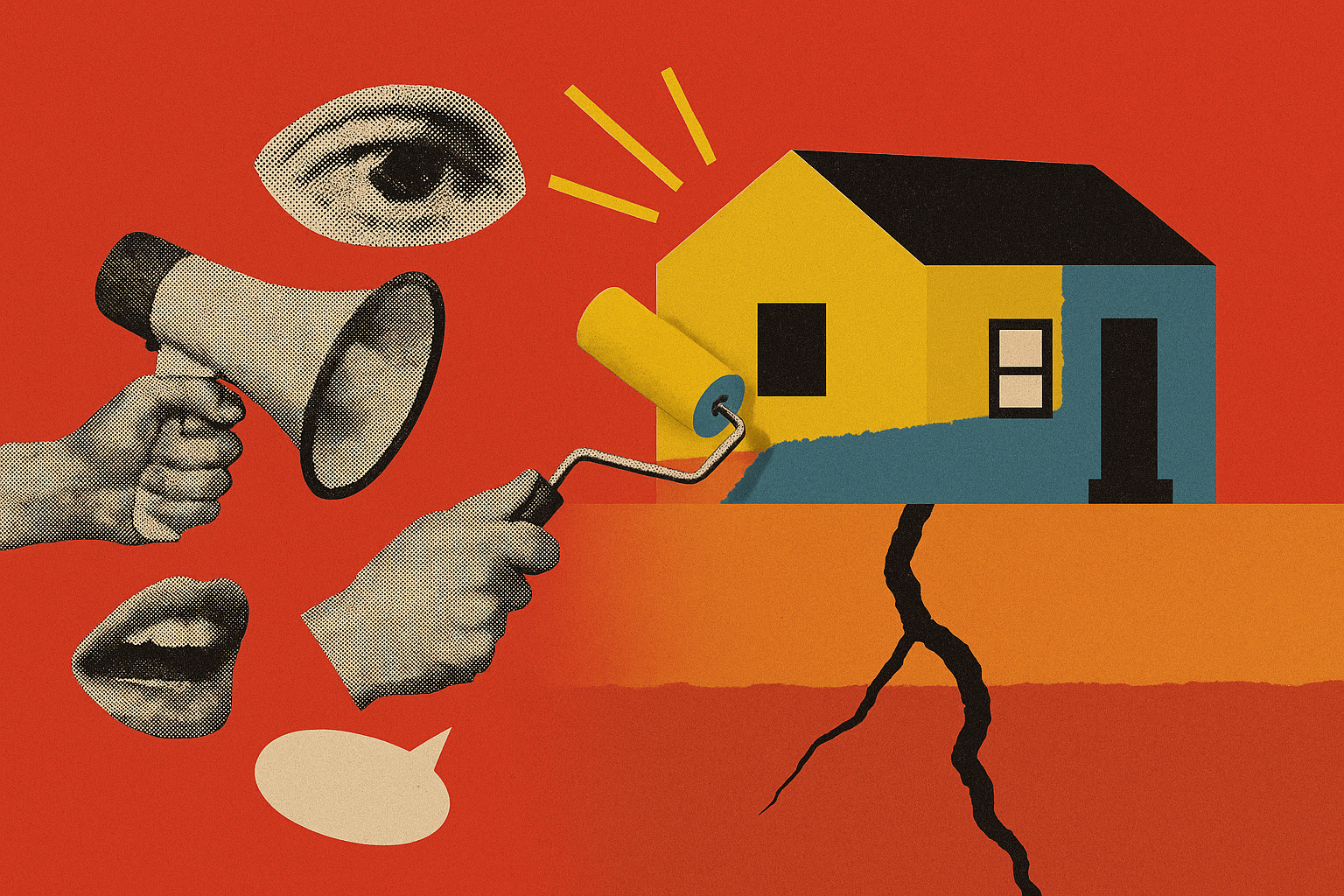
What should a B2B rebrand actually change, and what should it leave alone?
Most B2B rebrands change the logo and leave the story untouched, then wonder why the pipeline didn't move. Here's the scope test for what a rebrand should change, and the equity it should never blow up.
Does schema markup get your B2B company cited in AI search, or is it a waste of time?
Marking up every page won't make ChatGPT recommend you. Schema tells a machine what to file you under, not that you're worth recommending. Here's what actually earns the citation.
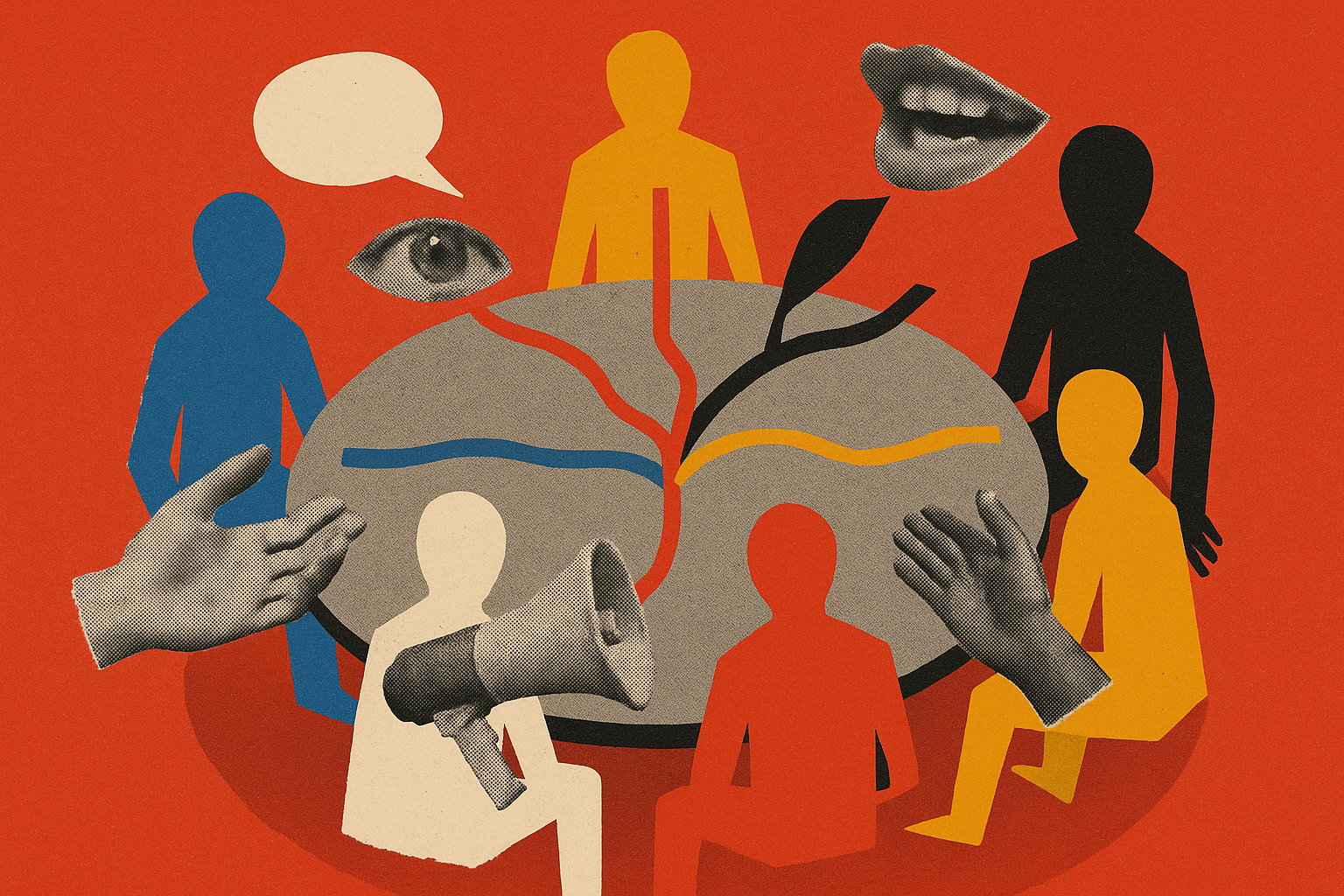
How do you message a B2B product to a buying committee instead of a single buyer?
You're not selling to a person anymore. You're selling to a room of six to 10 people who have to agree before anyone signs. Writing six pitches doesn't work. Averaging them into one safe message doesn't either. Here's the one-story, branched-proof move, plus a three-test diagnostic you can run this week.
How do we unify our brand messaging after an acquisition?
After an acquisition, the reflex is to bolt two stories together: keep both value props, both taglines, both feature lists. The market hears two companies and AI cites the clearer competitor. You don't unify by combining. You unify by deciding on one story ... and it's usually already in your deal thesis.
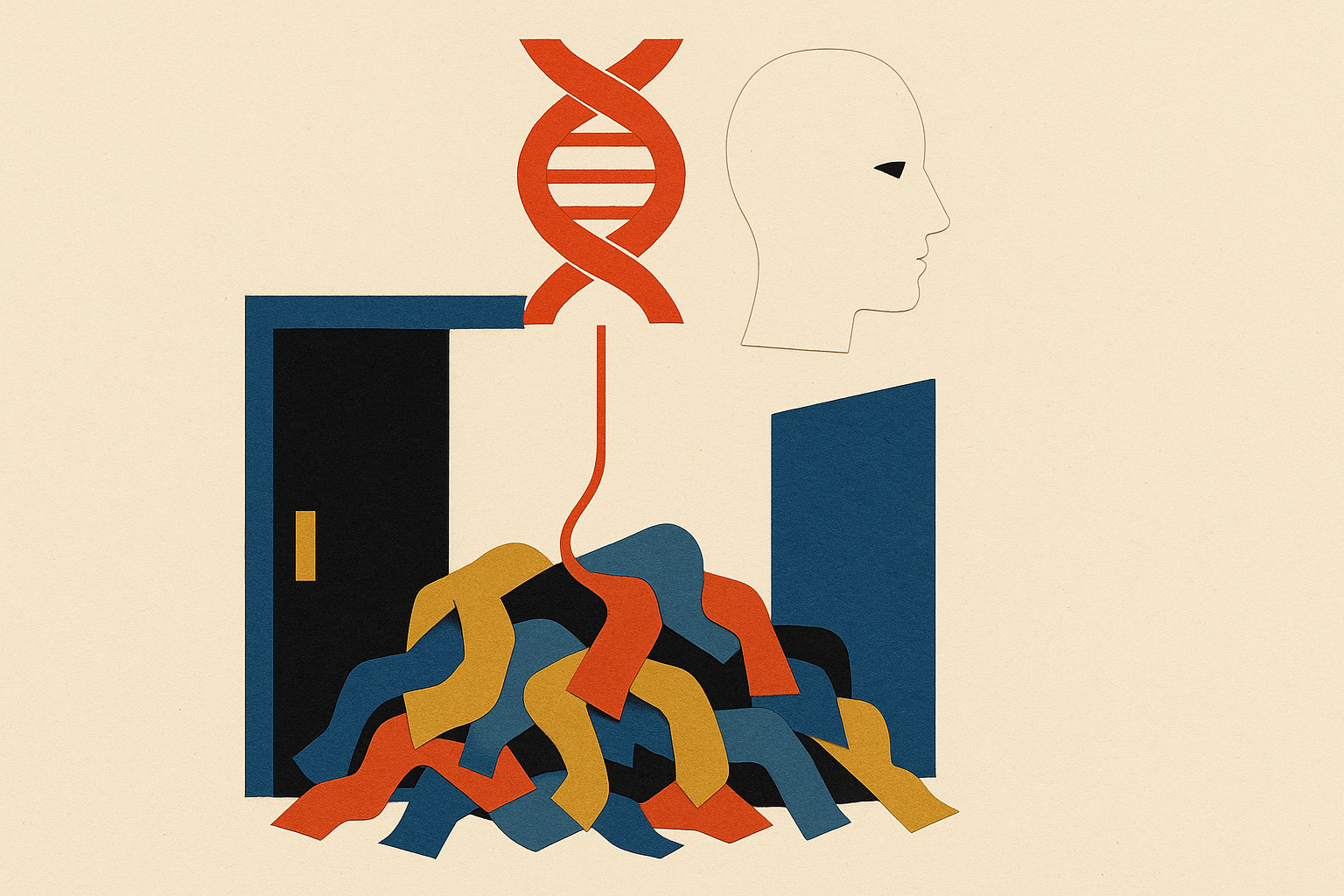
What is a narrative identity? The DNA and the face of your brand
Your real brand identity has two parts: the DNA (one documented bible of who you are, who you're for, and why) and the Face (the homepage where that story meets strangers and AI engines). Most companies have a messy closet instead of a bible. Here's the anatomy, and the three tests to run today.
How can we read AI visibility metrics without falling for inflated numbers?
Every B2B team suddenly has a score for how often AI recommends them. Most of those numbers are inflated by brand-seeded prompts and blended surfaces. Here's how to read them honestly, and the one lever that actually moves the needle.
How do you onboard a new sales rep so they sell like your best closer?
Your best closer isn't winning on product knowledge. They're winning on a story they carry in their head. Onboard reps on that narrative first, gate the demo behind it, and ramp compresses from quarters to weeks.

How do you get a leadership team to finally agree on the company's core message?
You don't get a leadership team to agree on the core message by discussion or vote. You surface each leader's private version, then resolve the gaps against customer evidence. Alignment is what you get after the decision, not instead of it.
Is our slow growth a messaging problem or a product problem?
When growth stalls, a founder's instinct is to doubt the product and build more, because building feels like progress. It's almost always the message. Here's why the Product Panic keeps a $5M-$75M B2B company stuck, a three-test diagnostic to tell a message problem from a product problem, and the fix that stops you spending two quarters of engineering on the one thing that wasn't broken.
Why does our messaging start over every time we hire a new marketing leader?
Every new marketing hire inherits no written source of truth, so they rebuild the message from their own playbook and the story starts from zero again. Here's why the Blank-Slate Reset keeps a $5M-$75M B2B company invisible, to buyers and to AI, a three-test diagnostic, and the fix that finally makes your message an asset instead of a hire.

How do you turn one strategic narrative into every sales asset (deck, one-pager, battlecard)?
The teams whose sales assets pull in the same direction don't have better writers. They build one narrative and translate it into every asset. Here's the cascade, from source to deck to one-pager to battlecard, and how to run it this week.
How do you measure whether AI engines are recommending your B2B company?
You can't fix what you don't measure, and most founders "measure" their AI visibility by typing their name in once. Here's the five-metric set, the tools, and the monthly cadence that actually tells you whether ChatGPT and Perplexity are recommending you.

What's the right structure for a B2B homepage that turns strangers into pipeline?
The homepages that turn strangers into pipeline all move in the same order. Here's the section-by-section structure, from the hero to the trust close, and how to run it on your own page this week.
Why do most fractional CMO engagements fail, and how do you pick one that won't?
Most fractional CMO engagements don't fail on execution. They fail on five predictable setups baked in before day one. Here are the five failure modes, and the selection scorecard that tells you who won't fall into them.
Should we fix our messaging or hire more salespeople when the pipeline stalls?
When the pipeline stalls, the reflex is to hire another rep. But if the message is the bottleneck, more headcount just spreads the confusion faster. Here's how to decide where the money goes.

How do you build a brand voice guide your whole team (and your AI) will actually follow?
Most brand voice guides are three adjectives that die in a Drive folder. Here's how to build one your whole team, and your AI, will actually follow: a format-by-format Voice Spec built on your real narrative.
Should we show pricing on our B2B website?
Hiding your pricing behind a 'Contact Sales' gate feels like leverage. It's usually a confession that your message can't defend the value without you in the room. Here's why the Quote Wall makes a $5M-$75M B2B company invisible to buyers and to AI, a three-test diagnostic, and the fix that isn't a pricing page.
Can we pay to get our B2B company recommended by ChatGPT, or does buying AI citations backfire?
A cottage industry now sells paid brand mentions to get you 'recommended' by ChatGPT and AI search. Here's why buying citations backfires, and what actually gets a B2B company cited.

Is a fractional CMO worth it for a B2B company? The honest math.
A fractional CMO costs a fraction of a full-time hire, but the real ROI depends on one thing most founders skip: whether your message is clear enough to scale. Here's the honest math.
Should the founder be the face of the brand, or does that make a B2B company look too small?
Making the founder the face of the brand doesn't mean looking like a one-man show. It means your point of view is in the message instead of scrubbed out to look bigger. Here's why hiding the founder makes a $5M-$75M B2B company invisible, and the fix that scales past you.
What makes a go-to-market narrative fall apart in live sales conversations?
A go-to-market narrative collapses on a live call when the story lives on the slides, not in the rep. Here are the seven causes, and how to build a narrative your reps can actually carry into a real conversation.

How long does it take to fix B2B positioning? A realistic 90-day timeline
Fixing B2B positioning takes about 90 days when it's run as a structured project instead of a rewrite. Here's the honest week-by-week timeline, the five things that stretch a quarter into a year, and what decides your finish line.
Why does our cold outreach get ignored?
Your cold outreach isn't ignored because you sent too few emails. It's ignored because the message says nothing a stranger cares about, dressed up in a personalized first line. Here's the diagnostic, and the fix that isn't another tool.
The "So What?" Test: Does Every Feature in Your Deck Connect to a Buyer Outcome?
A one-question audit that shows you exactly which slides in your B2B sales deck describe your product instead of moving the buyer: say "so what?" after every feature and score the answer.
The 60-Second Test: Can a New Rep Explain What You Do, Who It's For, and Why You're Different?
Give a new rep sixty seconds to explain what you do, who it's for, and why you're different. If the answer only works coming from you, you don't have a sales team... you have a founder-dependency problem. Here's the test, the scoring rubric, and the fix.
The Cover-the-Logo Test: would a stranger know who your homepage is for in five seconds?
Cover your logo, hand your homepage to someone who's never heard of you, and give them five seconds. If they can't tell who it's for and what you do for them, your logo is doing the work your words should. Here's how to run the test and fix what it exposes.
Why do our customers describe what we do better than our own website?
Your best customers can explain what you do in one clean sentence. Your homepage can't. That's not a writing problem, it's a Recipe Homepage: you wrote your site from inside the kitchen, describing the ingredients, while your buyers only care about the meal, what actually changed for them. Here's the diagnostic, the pattern across 100+ B2B companies, and how to steal your message back from the people who already say it best, your customers.
What questions should you ask a messaging or positioning consultancy before you sign?
You're about to hand a stranger your company's story and up to $45K. Portfolio and logos won't tell you whether they'll rebuild your narrative or just repaint it. These ten questions will, and here's what a real answer sounds like versus what should make you walk.
Or find your problem